
Finding Hurst Resident Records
Hurst has no single official list of everyone who lives in the city. Use the record that matches the question. A parcel search can associate an owner with land, while a deed identifies parties to a recorded instrument. The state voter tool checks an individual registration status under its own rules. A city staff listing is a current institutional contact, not a household record. Older research is more likely to begin at Hurst Public Library or Tarrant County Archives. Keep the role attached to every result: owner, deed party, voter record, staff contact, court party, or historical source.
Start with an address when possible. Tarrant GIS can orient the parcel, Tarrant Appraisal District can supply its account and legal-description fields, and the county tax search distinguishes the property location from an owner mailing address. Those fields are useful checks, but neither tax nor appraisal data is a certified title conclusion. If the goal is a whole named street rather than one address, the Hurst by-street directory follows that address trail in more detail.
- Enter the address in the GIS viewer and save the parcel account or map reference.
- Check TAD and the tax account, preserving property-location and mailing-address labels separately.
- Use the recorded-instrument index to confirm a deed party, document type, and recording date.
- For one person, use the voter, court, or vital route that fits the record type.
- For a past household, record the date and turn to library, archive, directory, or ledger holdings.
Note: A matching name alone is not enough; a parcel, instrument number, middle initial, or dated record helps prevent a false match.
Hurst Resident Records Offices
The offices behind a Hurst residents directory are not in one building. The Tarrant County Clerk keeps the real-estate index and copy routes in Fort Worth. TAD handles appraisal records, while county GIS helps place an address on a parcel. The Secretary of State provides the individual voter lookup. For city-held permits, code matters, and municipal files, Hurst’s City Secretary is the request route. Read the office name before relying on a result because each custodian controls a different type of record.
Tarrant County Clerk, Real Estate Records
100 W. Weatherford Street, Room B20/B30
Fort Worth, TX 76196
817-884-1069
Tarrant Appraisal District
2500 Handley-Ederville Road
Fort Worth, TX 76118-6909
817-284-0024
Texas Secretary of State
Individual registration status lookup
Texas voter records
Use the official portal
Hurst Parcels Through TAD and GIS
A Hurst address is best resolved before a name is pursued. The county’s GIS viewer accepts Address, Account, or Owner and links out to TAD and other county resources. TAD then returns a result list with an account number, geo reference, property address, city, primary owner name, and market value. Its detail view can show current owner fields, a legal description, site information, parcel count, notices, and document links. The legal description is especially useful because street labels can change or a parcel can be split.
| Hurst property tool | Observed search fields | Useful result fields |
|---|---|---|
| Tarrant GIS | Address, Account, Owner | Parcel orientation, map geometry, links |
| TAD Property Search | Property type and a search input | Account, geo reference, address, owner, value |
| Tarrant tax search | Account, owner address, owner name, property location | Situs, mailing address, legal description, account details |
The Tarrant County GIS Public Map Viewer is shown below. Use it to compare map geometry with the TAD account, then use a recorded instrument when the question turns to legal ownership.
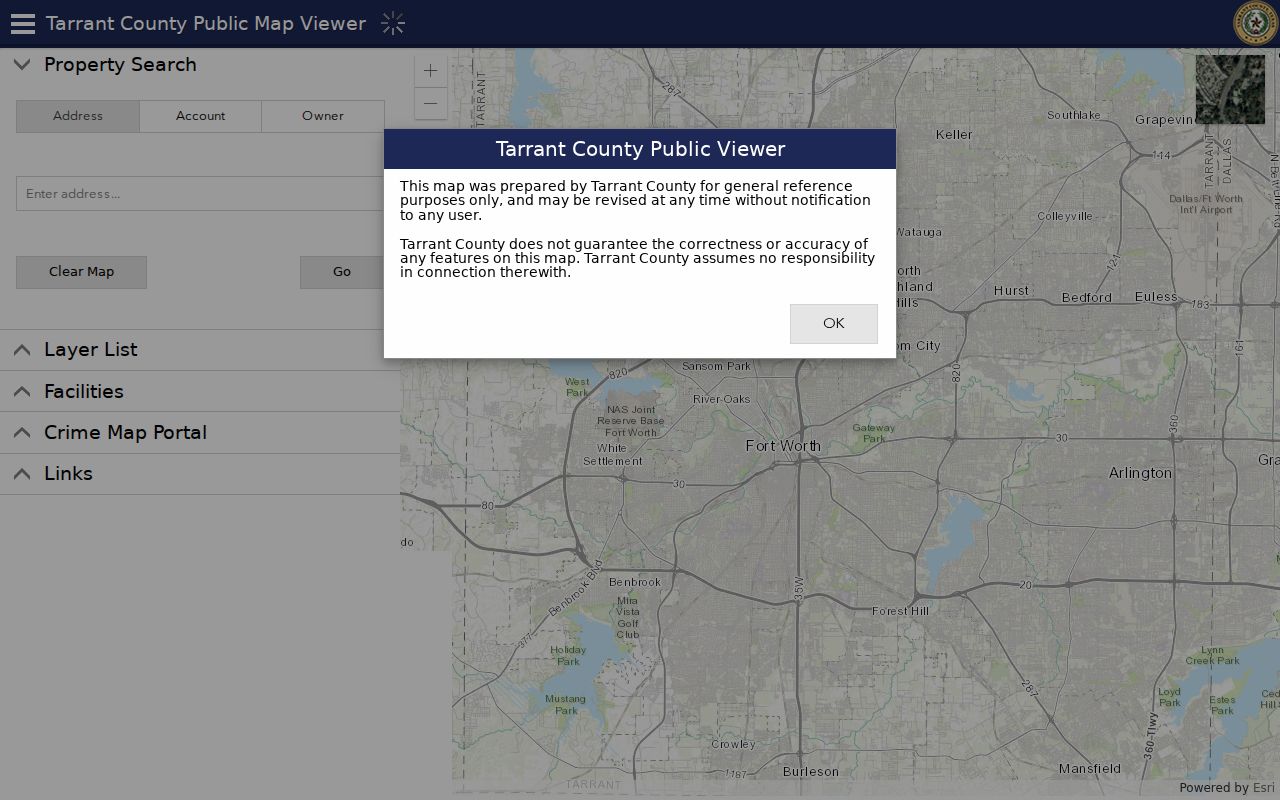
GIS supplies geographic context for a Hurst residents directory search. It does not replace the deed index or establish a complete ownership history.
Hurst Tax Records Need Context
The county tax portal is a billing and account source. Its displayed controls include a Search By menu for account number, owner address, owner name, or property location; account type; inactive-account and pay-status choices; a security check; and a search control. The result detail can include the owner, mailing address, situs, legal description, acreage, values by year, exemptions, payment history, receipts, and an estimator. That is a rich parcel profile, but a paid account or a current owner field is not proof of a full deed chain.
The Tarrant County tax search labels the actual parcel location separately from an owner mailing address. Preserve both, especially when a Hurst mailing label, the physical parcel, and the city boundary point in different directions.
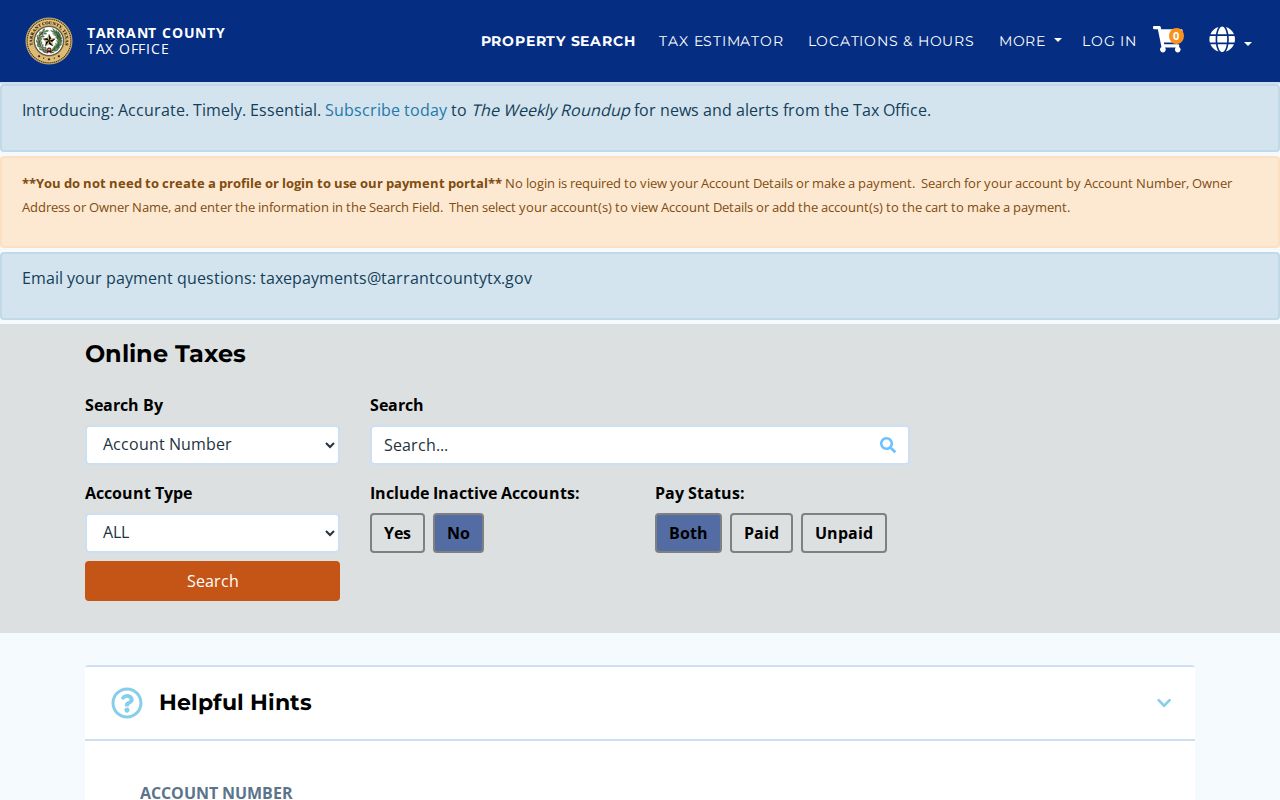
For a Hurst residents directory search, the tax page is a confirmation step between appraisal data and the recorded document, not the final word on title.
Note: Record the tax year and portal run date because values, exemptions, payment status, and notices change over time.
Hurst Voter Lookup Has Limits
Texas My Voter Portal is an individual lookup, not a public street roster. Its observed fields are Name, County, Date of Birth, and ZIP Code. Tarrant County directs online updates through the state route using a VUID. A broader Secretary of State voter-data request follows a different path: Form 24-2 requires a notarized affidavit and a deposit, permits selected geographic and status fields, and carries statutory use limits. Treat those routes as separate processes rather than trying to turn an individual search into a bulk directory.
The official Texas voter lookup provides the individual route. A protected address may display as asterisks under Texas confidentiality rules. Missing address text is not evidence that the person moved or that the registration is false.
Use the returned status and the portal’s current details cautiously. Voter records have field restrictions, and registration does not establish every fact about a Hurst resident.
Hurst Names in Recorded Instruments
Tarrant County’s Official Records Search is the county-linked entry point for recorded real-property material such as deeds, plats, liens, powers of attorney, and related instruments. The observed search interface offers a term for grantor or grantee, subdivision, document type, or document number, as well as date controls and choices for index-only or index-and-full-text searching. A grantor is the party transferring an interest; a grantee is the receiving party. Neither label alone proves who occupied the property.
When a document is needed, the county provides several channels: in-person kiosks and Room B30, a free unofficial watermarked online copy route, certified online ordering, and mail with the document number and payment. The clerk says it does not perform title or lien searches. Ask for an instrument or copy, then compare the legal description and dates yourself.
The Tarrant County Official Records Search is the portal shown in this capture. Its current public text does not state a complete historic online-image cutoff, so an old Hurst record may require deed-history cards or an archive visit.
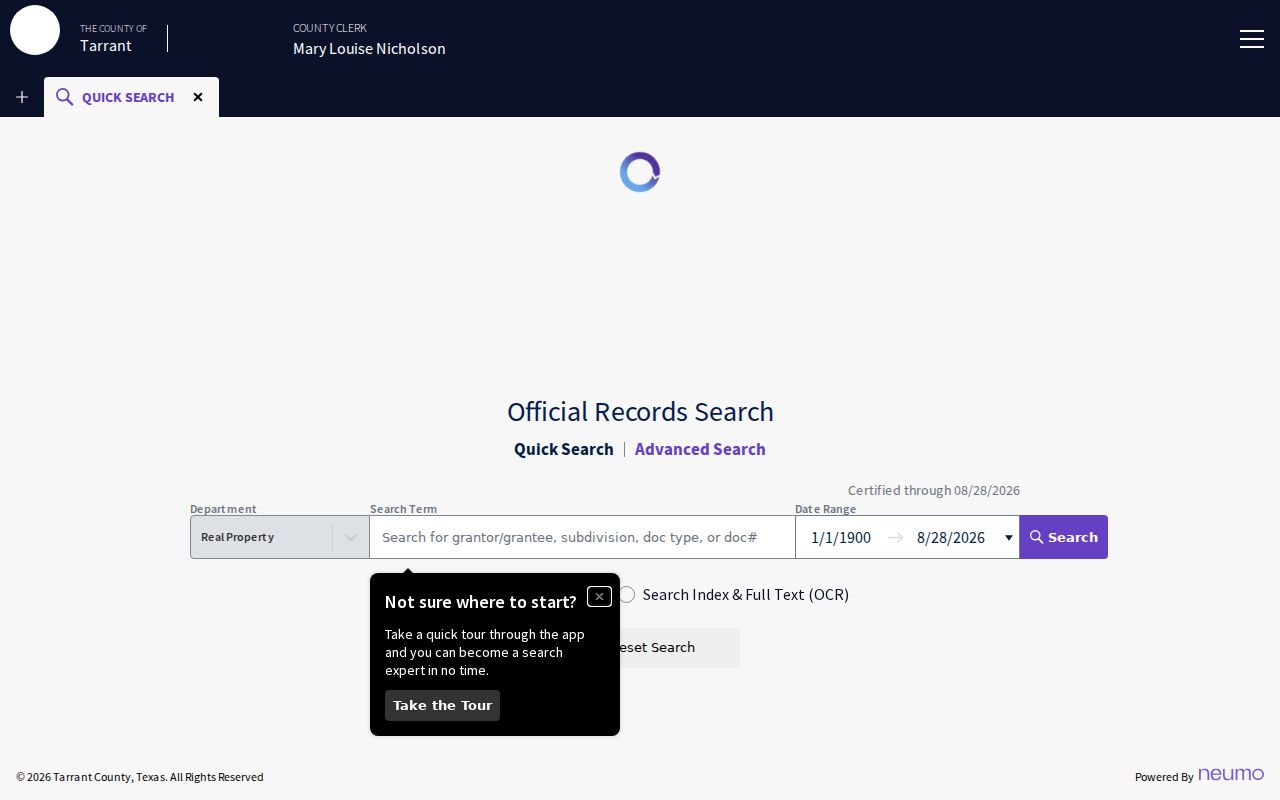
The indexed document supplies a documented party and date. It should be read with the instrument, not used as a shortcut to an unsupported claim about a household.
Current Hurst Resident Directory Sources
Current Hurst directory sources each describe a different relationship. A property portal names appraisal or tax parties. The voter portal returns individual registration information subject to confidentiality. A deed index names document parties. The City of Hurst staff listing is a current work-contact directory. None is a complete roll of all Hurst households, and a result should never be relabeled as something the source does not say.
| Source family | What it can show | Custodian | Access route |
|---|---|---|---|
| Parcel and tax records | Appraisal or billing association with a parcel | TAD and Tarrant County | Public portal |
| Voter status | Individual registration information with protected fields | Texas Secretary of State | My Voter Portal |
| Recorded instruments | Deed, plat, lien, and related document parties | Tarrant County Clerk | Official Records Search |
| Municipal staff listing | Current title, department, phone, and email | City of Hurst | Searchable staff directory |
Hurst’s staff directory displayed name, title, department, phone, and email fields in the research capture. It is useful for reaching the right city office, but names and assignments can change and it is not a history of local residency.
Hurst City Records Beyond Portals
Some useful Hurst records are held by the city rather than posted as a searchable index. The City Secretary accepts a written Public Information Act request through its online form. It can be the right route for a narrowly described permit, code-compliance disposition, planning file, municipal record, meeting material, or older administrative file. The form asks for contact details, a date, and a description of the record. Police requests use the city’s separate JustFOIA route.
A productive request names one department, one record category, a date range, and an address, account number, or case number when available. Ask for existing records in electronic form and allow a fee estimate. Do not ask staff to create a list, decide a legal issue, or infer a person’s history from files. Texas Government Code Chapter 552 is the state’s Public Information Act, but an exemption, redaction, or no-responsive-records answer remains a valid result.
Note: The city’s public form does not supply a complete retention schedule or fee table, so verify the current process with the Hurst public-information request page.
Historical Hurst Resident Directories
A historical Hurst residents directory search needs a careful repository check. Research did not verify a complete Hurst-only run with titles, publishers, and years. Hurst Public Library points local researchers to the Portal to Texas History, Tarrant County College Northeast Campus Heritage Room, the Texas State Library and Archives Commission, Texas Heritage Online, TARO, and genealogy holdings. HPL card access is required for its online resources, and its Ancestry Library Edition is described as onsite only.
City directories often have surname and street sections, but coverage varies by publisher and year. The Texas State Library and Archives Commission keeps print and microform directories in its Austin reading room and does not search or transcribe them by phone or email. UNT’s digitized 1961 Polk’s Greater Dallas sample describes useful directory divisions, but it is not proof that a Hurst household appears in that volume. The detailed repository routes and safe reading method are set out in the Hurst City Directories collection page.
Hurst Archive Routes and Record Gaps
Tarrant County Archives is an important fallback when a Hurst search moves before current portals or outside a verified directory run. Its holdings include more than 600 collections, historic ledgers, genealogy files, county property material, and marriage records. The Archives’ genealogy resources include marriage volumes from 1876 to 1901 and Footprints of Tarrant County Genealogical Society volumes from 1957 to 1997. It does not hold all vital records or provide a complete family-tree service.
For property history, Tarrant’s deed-history cards explicitly cover 1876 through 1984. Archives series add land, property, civil, criminal, election, and marriage context, though handwritten pages may not be text-searchable. The March 29, 1876 courthouse fire destroyed many early county records, making a pre-fire gap meaningful rather than conclusive. The Tarrant County Archives provides walk-in access Tuesday through Friday and Monday appointments.
Bring a focused question to the Archives. A request for a named ledger series, a date span, and a property, court, or marriage subject gives staff a practical starting point. For an older parcel, save the modern address only as a correlation detail, then give the account, legal description, subdivision, tract, or instrument number if the county tools supplied one. A ledger page can be valuable even when it is not text-searchable, but it needs a source note that records the volume, page, image, and access date. That simple trail makes it possible to revisit a Hurst finding without turning a partial index into a claim of complete coverage.
Hurst Oral History Adds Context
Hurst’s Library and Cultural Enrichment Board recorded a local oral-history project over roughly a decade. January 2025 minutes described about 30 videos and more than 60 hours of testimony. Later 2025 material reported the project complete, with individual testimonies and chapter videos. Those recordings can place a family, landmark, neighborhood, or local name in a period that a property or directory search cannot explain on its own.
Use oral history as a lead, not a substitute for a dated record. Save the speaker, video title, and date where shown, then test a property, office, or event claim against a deed, minutes, map, or archive source. The city’s Hurst History material also supplies search terms such as Parker, Arwine, railroad depot, post office, and incorporation that can help locate an older record under a name other than the modern city label. Those older labels matter before the modern city name became the standard reference.
Hurst Resident Searches Need Boundaries
A Hurst residents directory is not a license to assemble sensitive profiles. Texas rules protect some voter addresses and limit vital-record access by age, relationship, and record type. Court files can be sealed or redacted. A public property document can include more personal detail than is needed to identify the instrument. Use the official route, preserve the source date and limitation, and request only the releasable record needed for a personal, lawful purpose.
The Texas Secretary of State confidentiality guidance explains why protected voter data can appear as asterisks. Treat a redaction as a restriction, not a gap to work around through a different source.