
Verified Hurst Historical Collections
No complete, verified year-by-year Hurst city-directory run was located in the official sources reviewed. That is an important result, not an empty shelf. Hurst’s library identifies several regional repositories that can be searched volume by volume, while the Texas State Library and Archives Commission, or TSLAC, identifies print, microform, digitized, and library-database routes. The table separates a documented collection or access route from proof that a particular book actually covers Hurst. Before treating an address as a Hurst entry, inspect the title page, publisher, date, geographic scope, and the page division used.
| Collection | Years | Where Held | Access |
|---|---|---|---|
| TSLAC city-directory reference collection | Years vary by title | Texas State Library and Archives Commission, Austin | Print and microform in the reference reading room |
| UNT 1961 Polk’s Greater Dallas sample | 1961 | Portal to Texas History | Public digitized scan, Dallas sample only |
| Polk’s Fort Worth citation | 1959, 1963, 1965, 1967-1970, 1972, 1974-1976, 1978, 1981, 1991 | UT Austin Dolph Briscoe Center | Regional lead, inspect each volume for Hurst coverage |
| HPL and local-library database routes | Coverage not verified by Hurst title | Hurst Public Library | HPL card required; Ancestry Library Edition is onsite only |
| Tarrant Archives genealogy and local-history material | Series-specific dates | Tarrant County Archives | Collection and biographical-file research, not a full directory run |
The Hurst history-resources page also points to the Tarrant County College Northeast Campus Heritage Room, TSHA, Texas Heritage Online, TARO, TSLAC, and the Portal to Texas History. Those paths are useful when the first directory search has no Hurst result. They do not turn an unverified regional volume into a Hurst collection.
Note: Record the volume title and its stated coverage before saving any name or address as a Hurst city-directory finding.
Hurst Directory Access Routes
Hurst Public Library online resources list census, land and probate, court, vital and church, military, directory, and passenger-list material. An HPL card is required for the listed online resources. Its Ancestry Library Edition access is described as onsite only. This makes the library a real access channel for a Hurst historical-directory lead, but not a promise of an open, searchable Hurst-only database.
The TSLAC city-directory reference page distinguishes its Austin reading-room collection from alternatives at UNT, UT Austin’s Briscoe Center, onsite Ancestry, and HeritageQuest through local-library access. TSLAC says staff do not search or transcribe its directories by phone or email. A remote researcher therefore needs a digitized scan, a library referral, or a person who can inspect the physical volume.
Use the TSLAC directory guide as the source for this access view. The screenshot below shows the repository routes, not an index of Hurst households.
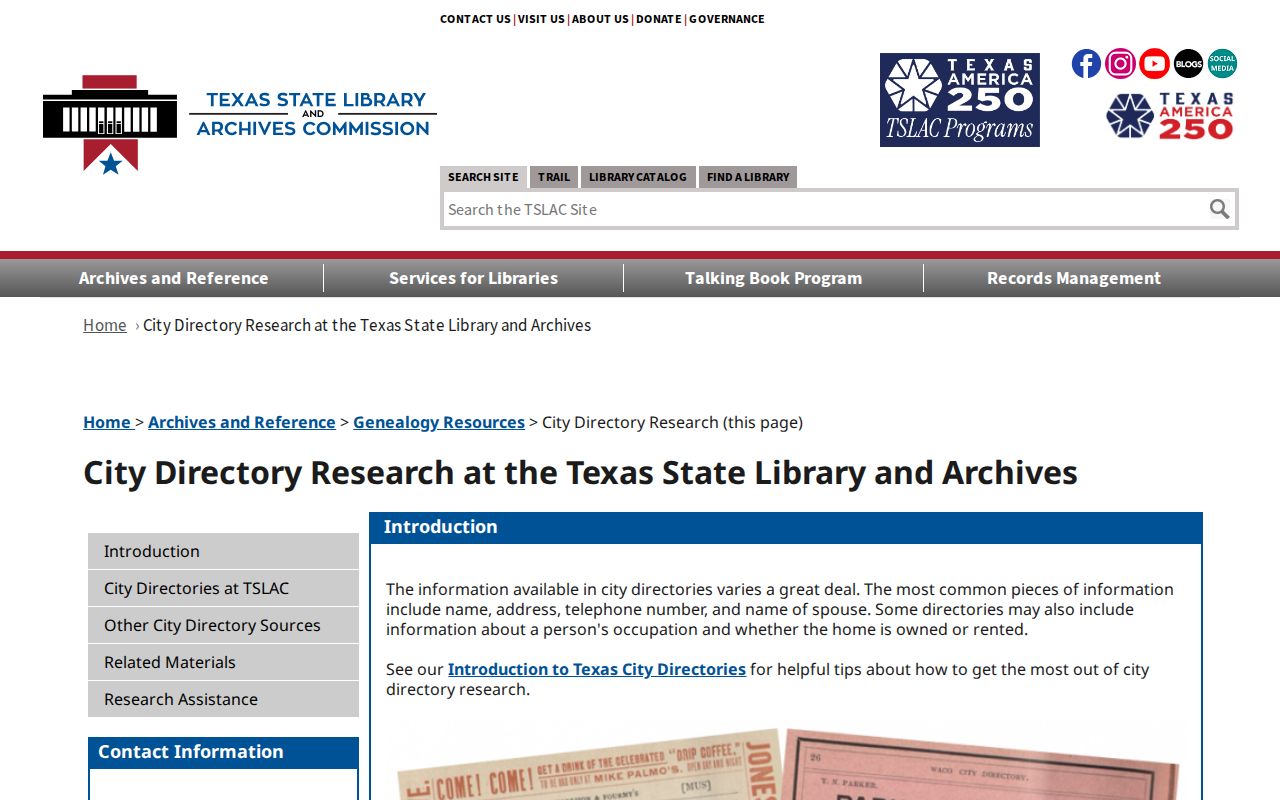
The access distinction matters. A scan you can read online, an HPL-card database, and an Austin reading-room volume require different search notes and leave different gaps.
Reading Hurst Directory Entries
A directory entry has to be read within its own volume. The Library of Congress city-directory guide describes common surname and address or telephone arrangements, along with irregular publication and door-to-door compilation. A particular publisher may print a household, spouse, occupation, institutional listing, or none of those details. The strongest practice is to record what is actually visible rather than fill a missing field from memory or another record.
| Name form | Capture initials, spelling, suffixes, and whether the page is a personal or institutional entry. |
|---|---|
| Address or telephone | Keep the printed form and compare it later with a street guide or deed legal description. |
| Household detail | A spouse or householder detail can appear, but only if that volume prints it. |
| Occupation or business | Use it as a dated lead, not proof that the person lived at every business address. |
| Page division | Label the source as alphabetical, householder, street guide, business, or another printed section. |
- Criss-cross directory
- An address-ordered directory or street guide that can connect a number and street to a listed name when the actual volume includes one.
- Householder index
- A section organized around a household or address rather than simply a surname list.
- Abbreviation key
- The volume’s own explanation of shortened terms. Photograph or transcribe it before interpreting an unfamiliar mark.
Checking Hurst Directory Coverage
The UNT 1961 Polk’s Greater Dallas scan is useful because its introduction identifies divisions for alphabetical private citizens and businesses, householders, office and business occupants, a street and avenue guide, miscellaneous matter, and yellow pages. It is not evidence that the scan covers Hurst. The publication is a Dallas sample, and its title and coverage statement must control any claim about a Mid-Cities address.
That check should happen before extracting a person. Search a title variant, open the title page, identify the town list or coverage wording, then inspect the appropriate alphabetical or street division. If the volume names Fort Worth, Dallas, Bedford, Euless, or a historical community label, preserve that label in the notes. A modern Hurst address is not a license to rewrite a historical source label.
The UNT scan shows the directory viewer and its page structure. It is a practical model for screening a regional volume without claiming that it is a Hurst directory.
A street guide can connect a printed number to a name, while a personal section can start with a surname. Either result still needs a date and a coverage check.
Tracing Hurst Directory Households
Use a household trail only after a volume passes the coverage test. A directory can show an occupant or listed householder at one publication point; it does not establish ownership and it does not prove that every household member appears. Pairing directory years with census schedules, deeds, cemetery leads, and an obituary or probate record helps separate an address lead from a well-supported family-history conclusion.
- Start with a surname, old address, or historical locality term and locate a volume whose title explicitly supports the search.
- Record the publication year, page division, name form, address, and every visible detail from the printed entry.
- Check the next available volume, not an assumed annual run, and note whether the same street or locality label remains in use.
- Pair a directory date with the relevant federal census schedule, available through the federal release framework and library or archive access routes.
- Use a deed, archive file, cemetery lead, or probate record to test a move, death, or property connection rather than guessing from disappearance.
People can be absent because a book was compiled irregularly, a route missed the address, the person was not the listed householder, or a move happened between compilation and publication. A blank year can be a collection gap as easily as a household change.
Hurst Directory Inspection Tip
Do not begin by reading names. Start with the title page, publication year, publisher, towns named, page divisions, alphabetical cutoff, street-guide coverage, and scan URL. This insider step prevents a regional listing from being promoted into a Hurst city-directory claim. It also makes a later recheck possible when a catalog record, scan, or access condition changes.
The same caution applies to the UT Briscoe citation for Polk’s Fort Worth volumes. It lists R. L. Polk & Co. volumes for specified years, but its locations list does not name Hurst. Treat it as a regional lead and inspect a specific volume before using it for a Hurst household.
Hurst Directories and Tarrant Archives
When a directory yields a name or place lead, the Tarrant County Archives genealogy holdings offer biographical files, named collections, Marriage Records volumes I-III for 1876-1901, and Footprints of Tarrant County Genealogical Society for 1957-1997. The Archives cautions that it does not hold all vital records or provide general family-tree research. That boundary keeps a directory lead in proportion.
The Archives is a Fort Worth repository, not a Hurst-only directory shelf. Its public access information lists walk-in service Tuesday through Friday, with Monday visits by appointment. Use the collection description to request a relevant file or series, and capture the item title, date, page, and source type.
The Archives genealogy page identifies the available research families and access notes.
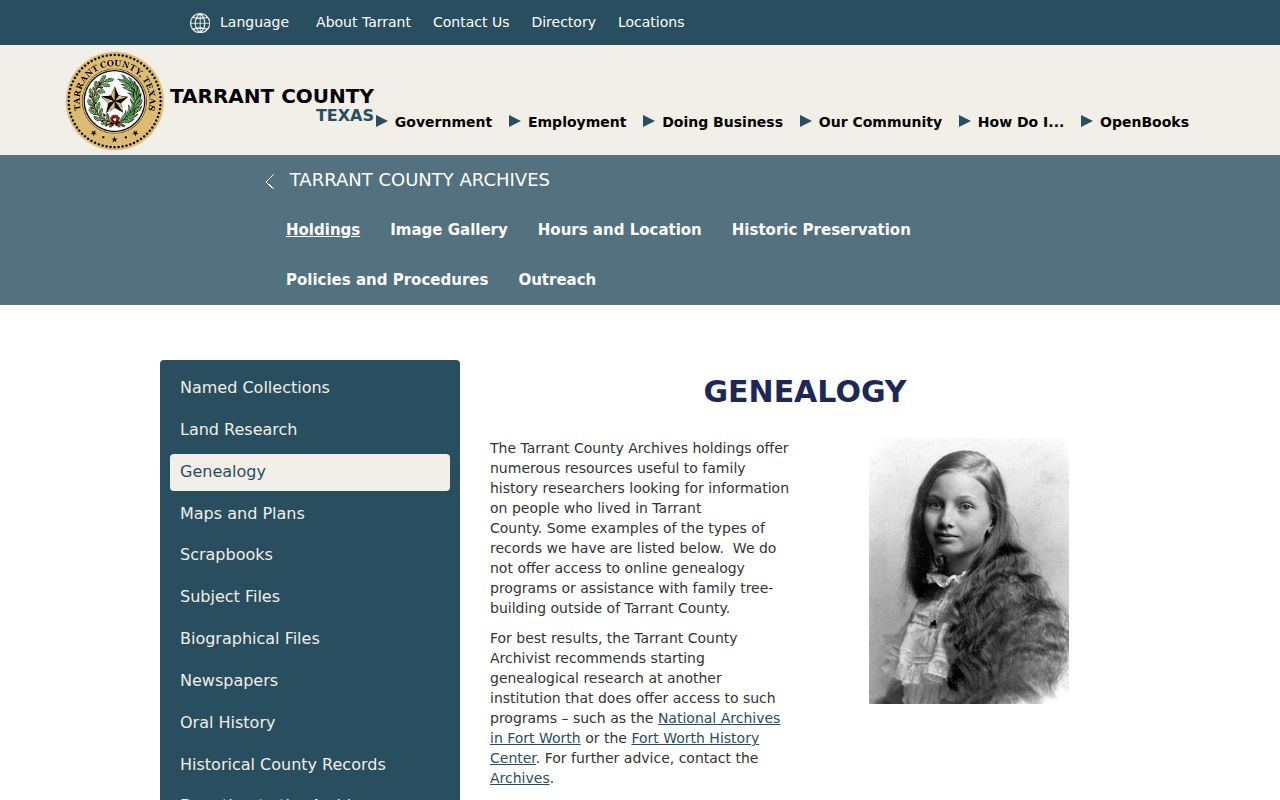
Archives material can confirm dates or relationships around a directory entry, but it should be cited as its own record type rather than merged into the directory line.
Hurst Directory Ledger Context
The Tarrant Archives historic-ledger collection contains county business series with date ranges from the 1870s into the late twentieth century. It is not a city-directory replacement. Its civil, criminal, election, land, livestock, marriage, naturalization, property, school, and license material can provide county context when a directory name connects to a transaction or place.
Handwritten fields may not be text-searchable. Read the scan, note the ledger series and page, and describe a person as a party to that ledger record rather than assuming residence from a name alone.
The historic-ledgers collection shows the series map and scanned-record links.
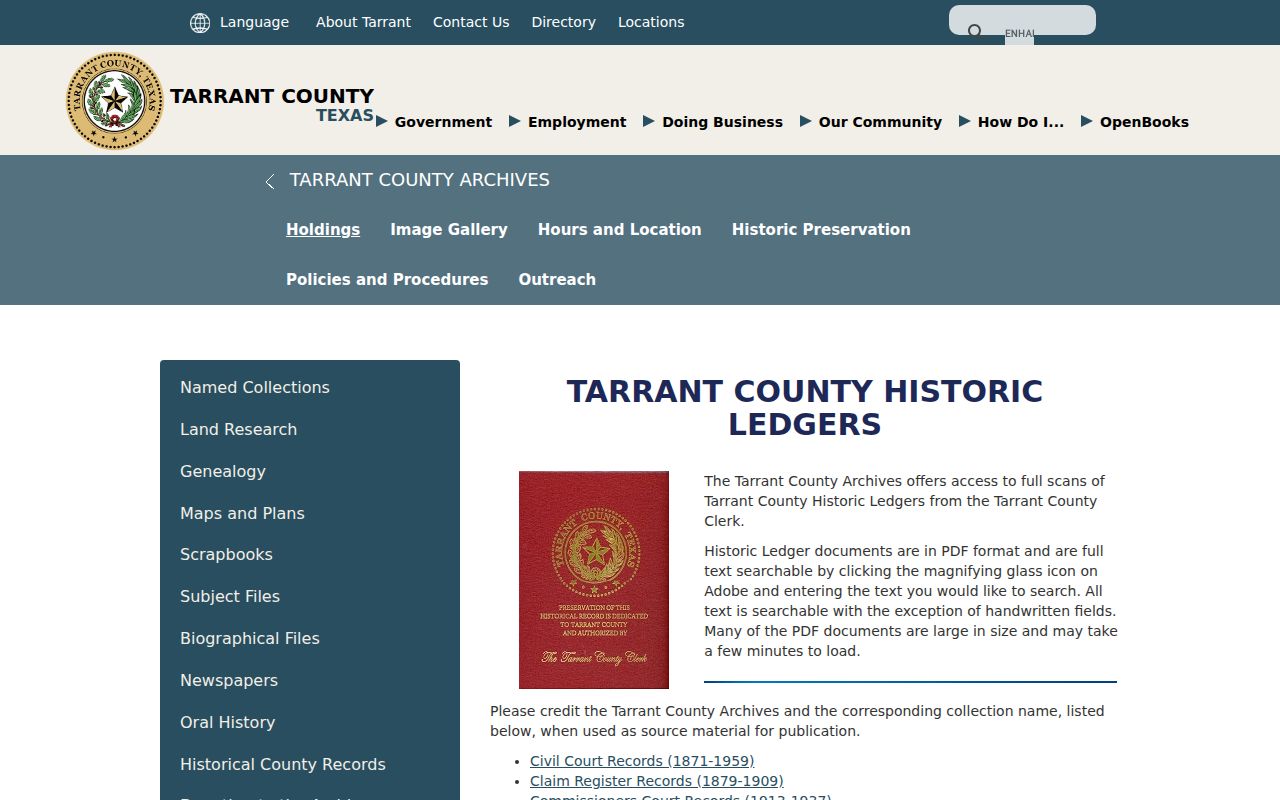
Combining a directory date with a ledger citation can strengthen a place history, while retaining the different meaning of each source.
Hurst Directory Gap Correction
Myth correction: a Fort Worth or Greater Dallas directory is not automatically a Hurst directory. The verified sources do not provide a complete official Hurst city-directory run, and no Hurst-specific publisher and year list was located. The research boundary is precise: a regional title becomes evidence for Hurst only after its own coverage language or pages show Hurst coverage.
The absence of a name is also limited evidence. Directory compilation can be irregular. A household may have moved, been outside a compiler’s route, used a neighboring city label, or been omitted because only a householder or subscriber was listed. Preserve “not found in the inspected volume” instead of turning one omission into a claim about the person or address.
Note: Hurst’s official history recommends search terms such as Tarrant, Hurst, Arwine, Bird’s Fort, and Birdville for older regional research.
Hurst Directory Date Markers
Place names and dates help decide which catalog term to try. The city’s official Hurst history identifies a railroad stop in 1903, the community name Hurst in 1909, a post office in 1949, and incorporation in 1952. Earlier records can use Parker, Arwine, a railroad, school, church, cemetery, or county label instead of the later city name.
- Before 1909: test Parker, Arwine, Bird’s Fort, Birdville, Tarrant County, and place landmarks.
- 1909-1948: test Hurst alongside regional and railroad-community wording.
- 1949-1951: include the post-office-era Hurst label in a title or catalog search.
- 1952 onward: compare the incorporated-city label with the regional title and exact address coverage.
These are search markers, not proof that a directory exists for every period. The Northeast Campus Heritage Room and HPL can help locate regional material, while the physical or digitized item supplies the actual citation.