
Finding Hurst Resident Records
Hurst keeps no single roster of residents. Match the record to the question instead. A parcel search links an owner to land. A deed names the parties to a recorded instrument. The state voter tool checks one registration under its own rules. A city staff listing is a contact point, not a household record. Older research usually starts at Hurst Public Library or Tarrant County Archives. Keep roles attached. Every result is an owner, a deed party, a voter, a staff contact, a court party, or a historical source.
An address is the better starting point. Tarrant GIS orients the parcel. The Tarrant Appraisal District supplies the account and legal-description fields. The county tax search splits situs from mailing address. Those fields make useful checks. But neither tax nor appraisal data is a certified title conclusion. To trace a whole named street rather than one address, the Hurst by-street directory follows that trail in more depth.
- Enter the address in the GIS viewer and save the parcel account or map reference.
- Check TAD and the tax account, preserving property-location and mailing-address labels separately.
- Use the recorded-instrument index to confirm a deed party, document type, and recording date.
- For one person, use the voter, court, or vital route that fits the record type.
- For a past household, record the date and turn to library, archive, directory, or ledger holdings.
Note: A shared name proves little on its own; a parcel number, an instrument number, a middle initial, or a dated record keeps a Hurst match from going wrong.
Hurst Resident Records Offices
No one building holds a Hurst residents directory. Custodians are scattered. The Tarrant County Clerk keeps the real-estate index and copy routes in Fort Worth. TAD handles appraisal records. County GIS places an address on its parcel. The Secretary of State runs the voter lookup. Hurst's City Secretary is the route for city permits, code matters, and municipal files. Read the office name before relying on a result, because each custodian controls a different type of record.
Tarrant County Clerk, Real Estate Records
100 W. Weatherford Street, Room B20/B30
Fort Worth, TX 76196
817-884-1069
Tarrant Appraisal District
2500 Handley-Ederville Road
Fort Worth, TX 76118-6909
817-284-0024
Texas Secretary of State
Individual registration status lookup
Texas voter records
Use the official portal
Hurst Parcels Through TAD and GIS
Resolve the Hurst address first. Names come later. The county's GIS viewer accepts Address, Account, or Owner and links out to TAD and other county resources. TAD answers with a result list. Each line carries an account number, geo reference, property address, city, primary owner, and market value. The detail view can add current owner fields, a legal description, site information, parcel count, notices, and document links. The legal description matters most. Street labels change, and parcels get split.
| Hurst property tool | Observed search fields | Useful result fields |
|---|---|---|
| Tarrant GIS | Address, Account, Owner | Parcel orientation, map geometry, links |
| TAD Property Search | Property type and a search input | Account, geo reference, address, owner, value |
| Tarrant tax search | Account, owner address, owner name, property location | Situs, mailing address, legal description, account details |
The Tarrant County GIS Public Map Viewer puts map geometry beside the TAD account for direct comparison. Geometry is only the start. The footprint confirms the parcel, not the ownership. When the question turns to legal ownership, a recorded instrument settles it.
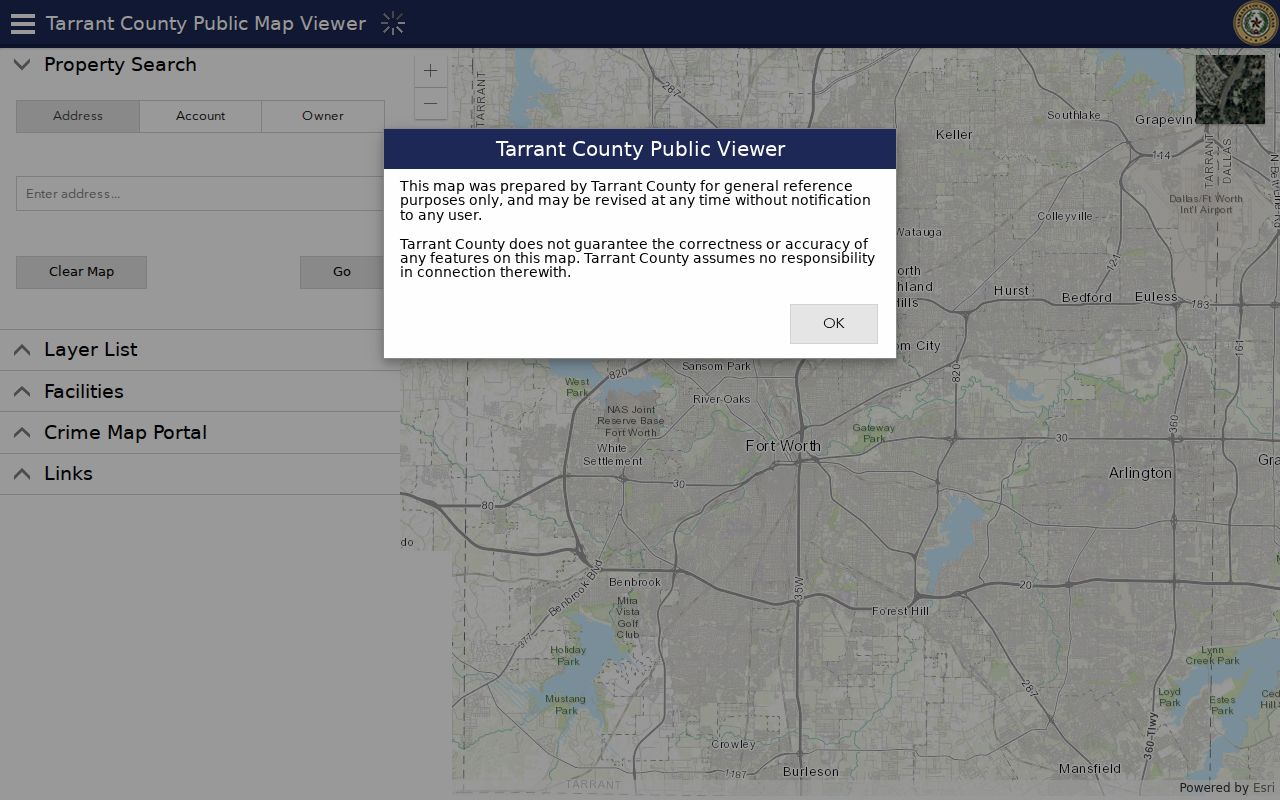
GIS adds geographic context. It supports a Hurst residents directory search, but it does not replace the deed index or complete an ownership history.
Hurst Tax Records Need Context
The tax portal is a billing source. Its Search By menu covers account number, owner address, owner name, or property location. Account type filters, inactive-account and pay-status choices, a security check, and a search control round out the page. The result detail runs deep. It can include owner, mailing address, situs, legal description, acreage, and values by year. Exemptions, payment history, receipts, and an estimator may follow. That is a rich parcel profile. A paid account or a current owner field still proves no full deed chain.
Labels matter here. The Tarrant County tax search lists the actual parcel location separately from an owner mailing address. Keep both, especially when a Hurst mailing label, the physical parcel, and the city boundary point in different directions.
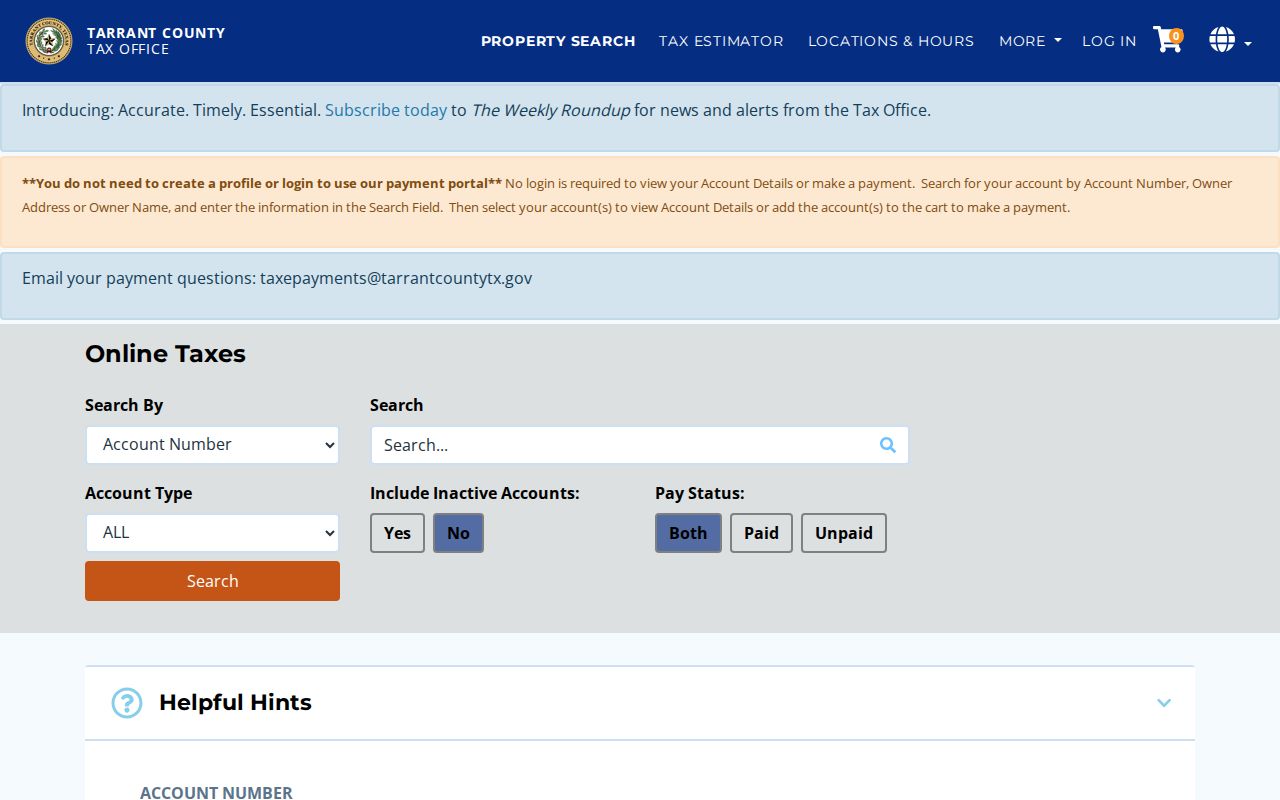
In a Hurst residents directory search, the tax page is a confirmation step. It sits between appraisal data and the recorded document. It is not the final word on title.
Note: Record the tax year and the portal run date, because values, exemptions, payment status, and notices change over time.
Hurst Voter Lookup Has Limits
Texas My Voter Portal is an individual lookup. It is not a public street roster. Its fields run to Name, County, Date of Birth, and ZIP Code. Tarrant County directs online updates through the state route using a VUID. A broader Secretary of State voter-data request follows a different path. Form 24-2 requires a notarized affidavit and a deposit, permits selected geographic and status fields, and carries statutory use limits. Those routes are separate processes. One search cannot become a bulk directory.
The official Texas voter lookup provides the individual route. A protected address may display as asterisks under Texas confidentiality rules. Missing text proves nothing. It does not mean the person moved or that the registration is false.
Treat the status with care. Voter records carry field restrictions, and registration proves only so much about a Hurst resident.
Hurst Names in Recorded Instruments
Tarrant County’s Official Records Search is the county-linked way into recorded real-property material. Deeds, plats, liens, and powers of attorney all sit in that index. The Tarrant County Official Records Search offers several lookup paths. You can search by grantor or grantee name. Subdivision, document type, and document number work as filters too. Date controls are there. You can also choose an index-only search or one that reaches full text. Remember the labels. A grantor transfers an interest; a grantee receives it. Neither label proves who actually lived there. A deed record is a starting point for a Hurst residents directory trail, not the finish line.
Copies come through several channels. The county offers in-person kiosks and service at Room B30. A free watermarked unofficial online copy is available. Certified online ordering is another route. Mail requests work with a document number and payment. The clerk will not run a title or lien search for you. Request the instrument itself, then compare legal descriptions and dates on your own.
The portal’s public text states no complete historic cutoff for online images. An older Hurst record may live on deed-history cards or in an archive visit instead. That limitation is normal for county record systems of this age.
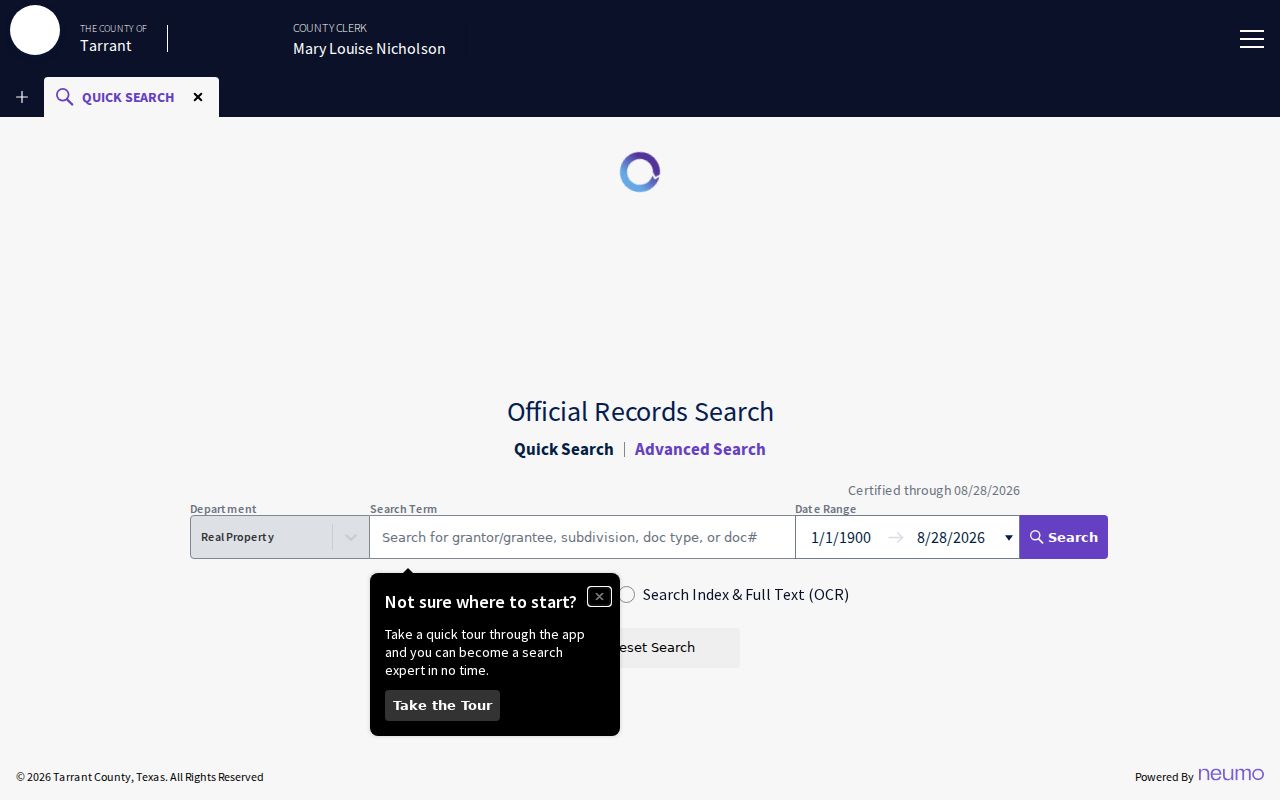
An indexed document gives you a documented party and a firm date. Read it alongside the full instrument. Treat it as a record, not as a shortcut to claims about a household no resident lookup can support on its own.
Current Hurst Resident Directory Sources
Current Hurst directory sources each describe a different relationship. A property portal names appraisal or tax parties. A voter portal returns individual registration information, subject to confidentiality rules. A deed index names only document parties. The city staff listing is a work-contact directory, nothing more. No single source is a complete roll of Hurst households, so never relabel a result as something the record does not actually say.
| Source family | What it can show | Custodian | Access route |
|---|---|---|---|
| Parcel and tax records | Appraisal or billing association with a parcel | TAD and Tarrant County | Public portal |
| Voter status | Individual registration information with protected fields | Texas Secretary of State | My Voter Portal |
| Recorded instruments | Deed, plat, lien, and related document parties | Tarrant County Clerk | Official Records Search |
| Municipal staff listing | Current title, department, phone, and email | City of Hurst | Searchable staff directory |
Hurst’s staff directory lists name, title, department, phone, and email for city personnel. It is handy for reaching the right office quickly. Assignments change, though, and the listing is not a history of local residency.
Hurst City Records Beyond Portals
Not every useful Hurst record sits in a searchable index. The City Secretary accepts written Public Information Act requests through an online form. That route fits a narrowly described permit, a code-compliance disposition, a planning file, a municipal record, meeting material, or an older administrative file. The form asks for contact details, a date, and a description of the record. Police requests go through the city’s separate JustFOIA route.
A strong request names one department, one record category, and a date range. Include an address, account number, or case number when you have one. Ask for existing records in electronic form and allow time for a fee estimate. Staff will not create lists, decide legal questions, or infer a person’s history from files. Texas Government Code Chapter 552 is the state’s Public Information Act, and an exemption, a redaction, or a no-responsive-records answer can all be valid results.
Note: Verify the current process on the Hurst public-information request page, since the form itself supplies no full retention schedule or fee table.
Historical Hurst Resident Directories
A historical Hurst residents directory search takes patience. No complete Hurst-only run of titles, publishers, and years is established for the county. Hurst Public Library steers local researchers toward the Portal to Texas History. It also points to the Tarrant County College Northeast Campus Heritage Room, the Texas State Library and Archives Commission, Texas Heritage Online, TARO, and genealogy holdings. Its online resources require an HPL card. The library’s Ancestry Library Edition is onsite only.
City directories often carry both surname and street sections. But coverage varies by publisher and year. The Texas State Library and Archives Commission keeps print and microform directories in its Austin reading room. It does not search or transcribe them by phone or email. UNT’s digitized 1961 Polk’s Greater Dallas sample shows useful directory divisions. It does not prove any Hurst household appears in that volume. For repository routes and a safe reading method, see the Hurst City Directories collection page.
Hurst Archive Routes and Record Gaps
Older Hurst records often lead to Tarrant County Archives. The facility holds more than 600 collections. Historic ledgers, genealogy files, county property material, and marriage records all sit in its stacks. Marriage volumes run from 1876 to 1901. Genealogists can also draw on Footprints of Tarrant County Genealogical Society volumes covering 1957 through 1997. The Archives is not a full family-tree service, and it does not hold every vital record.
Property research has its own anchors. Tarrant's deed-history cards explicitly cover 1876 through 1984. Other Archives series add land, civil, criminal, election, and marriage context. Many pages are handwritten and not text-searchable. The March 29, 1876 courthouse fire destroyed a large share of early county records. A pre-fire gap is therefore meaningful, not conclusive. The Tarrant County Archives welcomes walk-in visitors Tuesday through Friday and takes Monday appointments.
Go in with a focused question. Name the ledger series, the date span, and the property, court, or marriage subject you need. Staff can work with that. For an older parcel, treat the modern address as a correlation detail and offer the account number, legal description, subdivision, tract, or instrument number instead. A ledger page without search text can still be valuable. Record the volume, page, image, and access date in a source note. That trail lets you revisit a Hurst finding later without mistaking a partial index for complete coverage.
Hurst Oral History Adds Context
Hurst memory also lives on tape. The city's Library and Cultural Enrichment Board spent roughly a decade recording a local oral-history project. January 2025 minutes described about 30 videos. Testimony ran past 60 hours in all. Later 2025 material reported the project complete, with individual testimonies and chapter videos. A recording can place a family, landmark, neighborhood, or local name inside a period that deeds and directories cannot explain alone.
Treat oral history as a lead, not a substitute. Dated records still settle the question. Save the speaker, video title, and date where shown. Then test any property, office, or event claim against a deed, minutes, map, or archive source. The city's Hurst History material also suggests search terms such as Parker, Arwine, railroad depot, post office, and incorporation. Those older labels matter. They help you find a record filed under a name other than the modern city name.
Hurst Resident Searches Need Boundaries
A Hurst residents directory is not a license to build sensitive profiles. Texas shields some voter addresses. Vital-record access turns on age, relationship, and record type. Court files can be sealed or redacted. A public property document may carry more personal detail than the instrument requires. Use official routes, keep the source date and limitation, and request only the releasable record a lawful personal purpose needs.
Why would voter data show asterisks? The Texas Secretary of State confidentiality guidance has the answer. Treat a redaction as a restriction, never a puzzle to solve through another source.